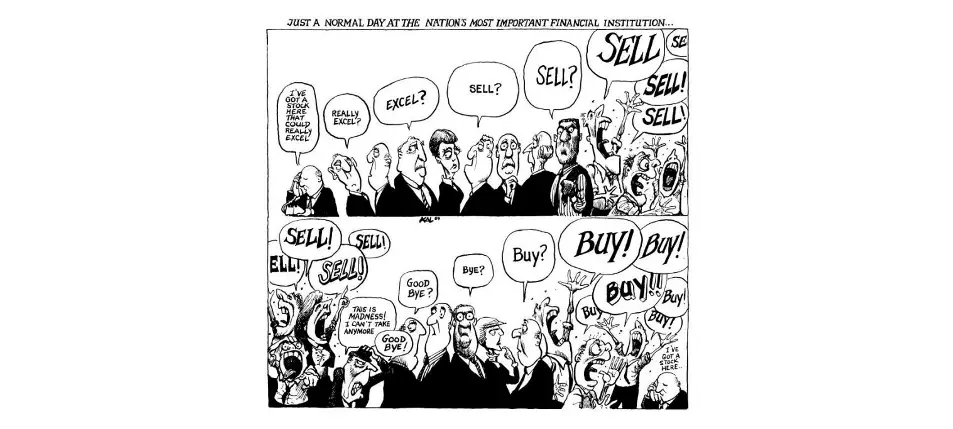
At the beginning of the year, I wrote: „You can’t predict, you can prepare.“ Time for an update. The ideal preparation meant reducing US exposure, both in terms of currency and equities, and increasing European and emerging market equities, especially China. Those who did so can be very satisfied with the performance to date. So far in 2025, US equities have lagged behind many international markets, both in local currency and in USD (Chart 1).
Chart 1: Global equities since the beginning of the year


However, part of the truth is that those who took advantage of the slump in US tech giants' share prices in April to re-enter big tech are probably even better off today. This is because the dominance of the American heavyweights is now greater than it was at the end of 2024. The “Mag 7” have shaken off the tariff chaos triggered by Trump like a brief bout of flu, exceeded analysts' expectations, and continued their impressive profit growth. In an environment of weak global growth (see Chart 4), investors are tolerating high valuations and postponing critical questions about the profitability of massive data center investments until the future.
The following charts illustrate the positive performance of US stocks, particularly those related to AI.The following charts illustrate the positive performance of US stocks, particularly those related to AI.
Chart 2: US stocks dominate the world

Chart 3: AI-related stocks dominate in 2025

Chart 4: S&P 500 earnings growth mainly driven by Mag 7

A lot of capital is flowing into data centers, and Mag 7 will become increasingly asset heavy.
Chart 5: CAPEX der Mag 7 vs. Rest (ex-financials)

Data center investments likely to exceed office construction investments soon
Chart 6: Data center vs. office investments

Investors believe in the boom, and the price trend in the second quarter of 2025 already shows signs of speculation.
Chart 7: After Liberation Day, momentum stocks and low-quality stocks rose the most

Fundamentally, the US market is more expensive than it has been for a long time.
Chart 8: S&P 500 price-to-book ratio

Chart 9: S&P 500 price-earnings ratio

Chart 10: S&P 500 historically expensive in 19 out of 20 valuation metrics

The market is now driven by just a few stocks. This poses a problem for passive investors: those who buy the index are no longer truly diversifying their risk. The following charts show the inverse Herfindahl-Hirschman Index—a measure otherwise used by competition authorities to gauge market concentration in industries. Applied to stock indices, it shows how many individual stocks are needed to replicate the diversification of the entire index. Currently, 100 stocks are sufficient for the MSCI World Index – a clear sign of the increasing dominance of a few heavyweights.
Chart 11: MSCI World: Concentration on a few stocks

Chart 12: S&P 500: Focus on a few stocks

Chart 13: S&P 500: Enormous weight of the top 10

In my recent articles, I have already pointed out the increasing index concentration, and as the charts show, the situation has worsened further. The top stocks are historically highly weighted (Chart 13). With this dominance, the risk of a setback inevitably increases. Nvidia alone now accounts for 8% of the S&P 500 – a historic record for a single company. However, setbacks in the Mag 7, such as at the end of 2022 or this year, have always ended in exemplary recoveries. One likely reason for this is that ETF inflows automatically flow into the index heavyweights, reinforcing their dominance. Added to this is generational optimism. Those younger than 40 have not yet experienced a real bear market in their careers; those under 55 know the dot-com bubble only from their youth. The experience of the financial crisis is fading, and “buy the dip” has become a successful strategy. As a result, private investors have often outperformed professionals during recent corrections.
Chart 14: Buy-the-dip among retail investors, caution among professionals

Fundamentally, the big tech companies are more profitable than ever and are exceeding their profit estimates year after year. A few winners in a highly networked world can dominate for longer than index heavyweights did in the past. At the same time, the extreme concentration calls for caution. Some price-earnings ratios are still below historic bubbles such as those seen in the Nifty Fifty era, but bubbles can also form around the earnings themselves. If these are not sustainable, even low multiples will not help. Currently, the earnings of the Mag 7 appear robust (see Chart 4), but risks remain.
History provides plenty of examples of how regulation brought down seemingly unstoppable corporations. Standard Oil and the American Tobacco Company were broken up in 1911, and AT&T had to give up its monopoly on the telephone network in 1984. Even Microsoft was on the verge of being split up in the late 1990s – only political deals prevented the breakup. Today, the issue is once again highly topical: the US Department of Justice is working on a possible breakup of Google, and a majority of the population supports this move. In Europe, looming digital taxes are increasing the pressure, with France already taking the lead with its GAFA tax. Combined with oversized AI investments and a possible revaluation by the markets, this adds up to a dangerous cocktail. The sentence „This time is different“ was often an expensive mistake on the stock market and should only be used with extreme caution this time around as well.
Despite all justified caution, it is also true that the big tech companies are enormously profitable, and AI is changing the world with efficiency gains in practice that we (not the stock market) probably still underestimate. Where real disruption occurs, there is almost inevitably room for long-lasting upward exaggeration. In 1996, Alan Greenspan warned of the dot-com bubble with his famous “irrational exuberance” – correct in substance, but four years too early. During this period, the market knew only one direction: up. Those who wait too long on the sidelines often miss out on the decisive moment.
Chart 15: Irrational Exuberance

This means that even overpriced shares can become even more expensive – and remain so for years. KochBank Research mentions a famous example in its latest NewsletterJulian Robertson, founder of Tiger Management. He recognised the dot-com bubble early on and aggressively shorted tech stocks. The problem was the timing: the shares not only remained irrationally expensive, they went ‘magnificently, historically insane’. The NASDAQ doubled after Robertson placed his bets. In March 2000, he had to close his fund – exactly the month in which the NASDAQ peaked. Robertson remains a legend nonetheless: over almost two decades, he achieved >30% returns per year, laying the foundation for the famous ‘Tiger Cubs’.
In most cases, it is precisely these hype stocks that break records. However, I do not consider pure speculation on ever-rising prices to be a viable approach. As valuations rise, so does the potential for a fall. I am convinced that tomorrow's real AI winners are still investable at current prices and will grow into their valuations. At the same time, however, many of the supposed ‘future AI winners’ will not live up to expectations. It is difficult to predict which stocks will ultimately win or lose. However, I am convinced that only a few companies will live up to their current valuations. The risk/reward ratio in the sector appears unattractive. We have recently seen on a small scale with the ‘Covid winners’ that markets can misprice companies.
Chart 16: From Covid winner to share price disaster

Permanent capital loss must be avoided. As expectations rise – and with them valuations – so does the risk of high losses. Those who pay for perfection can hardly be surprised in a positive way. Investing with a safety buffer only works with a reasonable valuation, because the profit (or at least the avoided loss) lies in the purchase.
But which segments are interesting?
Equal Weight
For investors who want to diversify broadly, the equal-weight variant, which I have already mentioned in previous blog articles, is a good option. In the long term, this approach has performed better than traditional market capitalisation. As long as the AI party is in full swing, you may lag behind, but you will be better equipped to deal with setbacks among the index heavyweights and benefit from a trend reversal.
Chart 17: Equal-Weight Index – Outperformance over time, underperformance recently

Small caps
Small caps are also exciting, as they continue to underperform large caps and have recently seen high outflows again. The excess returns on small caps documented by Fama/French and touted up and down university campuses have disappeared for years. But the more unpopular and cheaper these shares become, the greater the likelihood of a trend reversal. If interest rates are cut in September as expected by the market, this should support small caps in particular.
Chart 18: US small caps vs. large caps as weak as they were before the dot-com bubble

Chart 19: US Small Caps with record outflows

Emerging Markets
Emerging markets also remain interesting: they will have performed strongly by 2025, yet will still be attractively valued by historical standards. Many emerging markets will benefit additionally from a weak dollar, as they are predominantly indebted in US dollars. Added to this is structurally higher growth, driven by less regulation, weaker welfare states and favourable demographics. China is the exception: a shrinking population, real estate crisis, middle-income trap and geopolitical uncertainty (keywords: Russia, Taiwan, threats of ADR delisting in the US) justify a valuation discount.
Nevertheless, China is a good example of successful countercyclicality. Investors had to endure a long dry spell, but were then rewarded. Over a three-year period, the Hang Seng Index is now almost on a par with the S&P 500. Anyone who invested a year ago is now sitting on even higher profits than US investors, despite unchanged or even worse fundamentals (including the tariff dispute at the beginning of 2025). The market was simply too negative and valuations too low. The advantage in such phases is that the downside risk is limited because the bad news is already priced in. Even small positive surprises can then have a disproportionate effect.
Chart 20: Hang Seng beats S&P 500 over the year

Unpopular sectors
Not all sectors are benefiting from the upturn: some industries remain unpopular with investors despite record markets. There are many reasons for this, ranging from weak demand to Trump's tariffs. But first things first.
chemical stocks
Whether in construction, agriculture, cosmetics, medicine or packaging – products from the chemical industry are everywhere. And yet chemical stocks are currently in crisis. One could even call it a perfect storm: hardly any other industry consumes as much energy, while at the same time companies are burdened by restrictive ESG requirements, the war in Ukraine with its resulting high gas prices and great uncertainty, general economic weakness and geopolitical tensions.
The weak order situation, combined with difficult location conditions (greetings to Ludwigshafen), is weighing on profits and has sent the share prices of many chemical stocks plummeting. Some are now even trading below the value of the factories listed on their balance sheets. Although the profit and loss accounts do not look very encouraging at present, the chemical industry has always been cyclical and there are no signs of a structural demand problem.
Shares in companies with strong management and good crisis management are therefore likely to prove a very promising investment in the medium to long term. However, given the overall economic situation, patience is still required. Encouraging: there have been numerous insider purchases in recent weeks (Here Subscribe to newsletter for German insider purchases) – in Germany, for example, at Symrise, K+S, Wacker Chemie, Evonik and FUCHSInternationally, these include Celanese, Arkema and LyondellBasell (although there was recently a major sale in the latter case). For those who want to delve deeper into the subject, Hosking Partners has published an interesting article on this topic (Metamorphosis).
E-Commerce
Let's move on to the next bombed-out sector: e-commerce. Here, too, a violent storm blew through. Many stocks were considered clear winners during the pandemic and were skyrocketed thanks to high growth rates. Covid undoubtedly accelerated online retail, but the euphoria was followed by a hangover: numerous stocks plummeted. The reasons were exaggerated valuations, declining growth, high container prices, excess inventory and too many staff following overly optimistic forecasts. In addition, the flood of cheap products from China (Temu and Shein send their regards) is exacerbating the pressure on the industry, as they deliver directly to end customers and bypass platforms.
Many investors have been burned in this environment and turned their backs on the sector in 2022. With our M&A firm Sellside Partners we see this disillusionment at the forefront. But the long-term trend remains intact: more and more consumers are ordering online. Various sources expect annual growth of between 10% (Statista) and 15% (Zion Research) for the global e-commerce sector over the next five years.
Examples: Westwing, one of Europe's market leaders in furniture mail order, has almost 9 million Instagram followers and is expected to return to growth from 2026 onwards. After years of stagnating at around €8, the share price is already up 50% in 2025. Hellofresh delivers meal kits directly to your doorstep and is even the market leader in the USA. Zalando is the European market leader in online fashion and has been able to continuously increase its sales. The company is transforming itself from a pure e-commerce retailer to a fashion platform and, through its ZMS (Zalando Marketing Services) division, offers sponsored placements for brands on its website and app – with significantly more attractive margins.
Chart 21: Share price performance of leading German e-commerce companies

Noteworthy: All three stocks have recently seen insider buying – a sign that management believes in their potential. Fortunately, Westwing's rapid rise in share price came earlier than expected. Although patience is likely to remain necessary in this sector, there is enormous potential here.
Relevant international e-commerce stocks include:
- AlibabaChina's largest online retailer with platforms such as Taobao, Tmall and AliExpressOne of the big players globally, despite geopolitical pressure and a weakening domestic economy.
- ShopifyNot a marketplace, but an infrastructure provider: millions of retailers operate their online shops via Shopify, an extremely high-margin business model.
- MercadoLibreOften referred to as the ‘Amazon of South America’. Leading marketplace in Latin America, complemented by a rapidly growing payment division. Mercado Pago and fintech offerings. LatAm Payments also includes companies such as PagSeguro, StoneCo and NuBank zu nennen.
- JD.comOne of China's largest online retailers, focusing on its own inventory and logistics. More vertically integrated than Alibaba.
- eBay: Pioneer in e-commerce. Today, particularly strong in niche markets (second-hand, specialised markets), but still relevant globally.
- PinduoduoOriginally a social commerce platform in China, now global through Temu Extremely strong growth, aggressive pricing model, market share primarily in the USA and Europe.
- RakutenJapan's leading marketplace, combining e-commerce with fintech, banking and mobile. Strong nationally, but lagging behind Amazon & Co. internationally.
- AllegroMarket leader in Poland, with a strong position in Eastern Europe. A kind of ‘Amazon of Poland’.
- EtsySpecialising in handmade, vintage and niche products.
- WayfairFocus on furniture and home goods. One of the largest in the United States, but struggling with weak margins and fluctuating demand.
- ChewyUS specialist in pet supplies with a loyal customer base and a growing subscription model.
Other sectors
Healthcare stocks are also under pressure, particularly in the pharmaceutical and biotechnology sectors. Tariffs are causing uncertainty among pharmaceutical stocks. In addition, Trump has announced his intention to reduce high drug prices in the United States. While the tariff issue could probably be resolved, a price reduction would be a serious problem, as many pharmaceutical manufacturers generate the majority of their sales in the United States.
Similar to e-commerce, the biotech sector experienced a hype during the coronavirus pandemic, but then gradually faded into obscurity. Today, many investors are pinning their hopes on a breakthrough in the fight against cancer (Biontech is considered promising here). Should a company achieve such success, it is likely to give the entire industry a massive boost.
Other sectors have also fallen out of favour: luxury goods manufacturers (LVMH, Kering, Burberry), sporting goods companies (Nike, Adidas, Lululemon) as well as consumer staples such as Nestlé, including numerous alcohol producers (Diageo, Campari, Pernod-Ricard, Constellation Brands, Brown-Forman). Finally, German car manufacturers (Mercedes, Porsche, BMW, Volkswagen) and their suppliers – they are among the biggest losers in terms of share prices due to multiple problem areas.
Special situations
There are interesting special situations in every market environment. The trade idea RTL (to the article) is developing positively, albeit with some delay: the share price has risen by more than 20% since then, a dividend of €2.50 (approx. 8%) has been paid out this year, and the Netherlands deal has now been approved by the authorities. This means that in May 2026 (one year later than expected), a special dividend of €5 (approx. 14% of the current share price) will be paid in addition to the regular distribution.
Less satisfactory, however, is the development in Teleperformance, the world's largest call centre provider. Customer support is considered one of the first clear losers of AI, and the stock has been severely punished as a result. The counterargument is that multinational corporations will continue to need a professional partner who can combine human and artificial intelligence for them, depending on the application. In the past, this has almost always been Teleperformance (average customer loyalty of 13 years).
The problem: Management does not seem to be taking the situation seriously enough and refers to internal AI initiatives that sound more like buzzword bingo than genuine transformation. Added to this are management changes and insider sales at low share prices, which do nothing to inspire confidence. On a positive note, the integration of Majorel (acquisition of Bertelsmann and Saham) is progressing. Bertelsmann and Saham each received around one third of the purchase price in the form of Teleperformance shares. Today, both hold just under 4% each, making them among the largest shareholders. There, too, one must be dissatisfied with the current share price performance. At the current valuation (P/E ratio of 7), a stronger share buyback programme (buybacks are already underway) is called for, possibly even privatisation through private equity. It remains exciting.
Speaking of exciting:
When managers buy or sell their own shares, they must report this to the financial supervisory authority (in Germany, this is BaFin). Such transactions often provide valuable insights. There can be many reasons for selling, such as liquidity requirements or diversification. Purchases, on the other hand, almost always convey a single message: confidence in one's own company (or at least the desire to signal this confidence).
Under the section „Insiderdaten“ we publish the latest manager transactions (including a five-year history). Click on the ‘Receive free email updates’ button to sign up for our weekly newsletter (sent every Friday at 7 a.m.), which summarises the most relevant purchases of the week sorted by size. You can also set up individual notifications, for example, for a certain trade size or for selected companies and managers. As soon as a matching deal is reported, you will automatically receive an email.
The service is new and free of charge – feel free to try it out and give us your feedback.
Disclaimer: All information is at all times and without exception my personal opinion and judgement. No information, materials, services or other content provided on this website constitutes a solicitation, recommendation, endorsement or financial, investment or other advice. All information (forecasts, comments, hints, advice, etc.) is for educational and private entertainment purposes only. If visitors follow this advice, they act on their own responsibility.